

When I tell people that I am an environmental economist, I often get a puzzled look.
What is that?
How do economists care about the environment? And why?
I usually try to explain that we study the impacts of pollution related to manufacturing and production on the natural environment, and how those negative impacts can be mitigated. The response I often get is one of surprise. Many people assume that environmentalists study these issues, not economists.
Environmental economics is actually a relatively young field. It became more formalized in the 1960s, largely in response to rising concerns about pollution and its impacts. The American Economic Association recognizes the field through its official subject classification system as JEL Q5 -Environmental Economics. My own research focuses on pollution, pollution control, climate change, and technological innovation within the broader environmental economics umbrella.
In this post, I want to focus on a common misconception about environmental economics and explain the reality behind it.
In my experience, most people associate economists with money and financial markets. That is true for some economists. Others associate economists with taxes and public finance. That is also true. But economics is a much broader discipline.
I see this misconception clearly in my environmental economics course. Most of my students are engineers or majors in environmental science. In the first week of class, some come in assuming that I will teach them how costly it is to protect the environment, or that I will argue for prioritizing the economy over the environment.
Instead, I teach them that we should carefully consider the costs and benefits of environmental protection and that we must also quantify the many non-monetary benefits nature provides for free. A classic example is pollination.
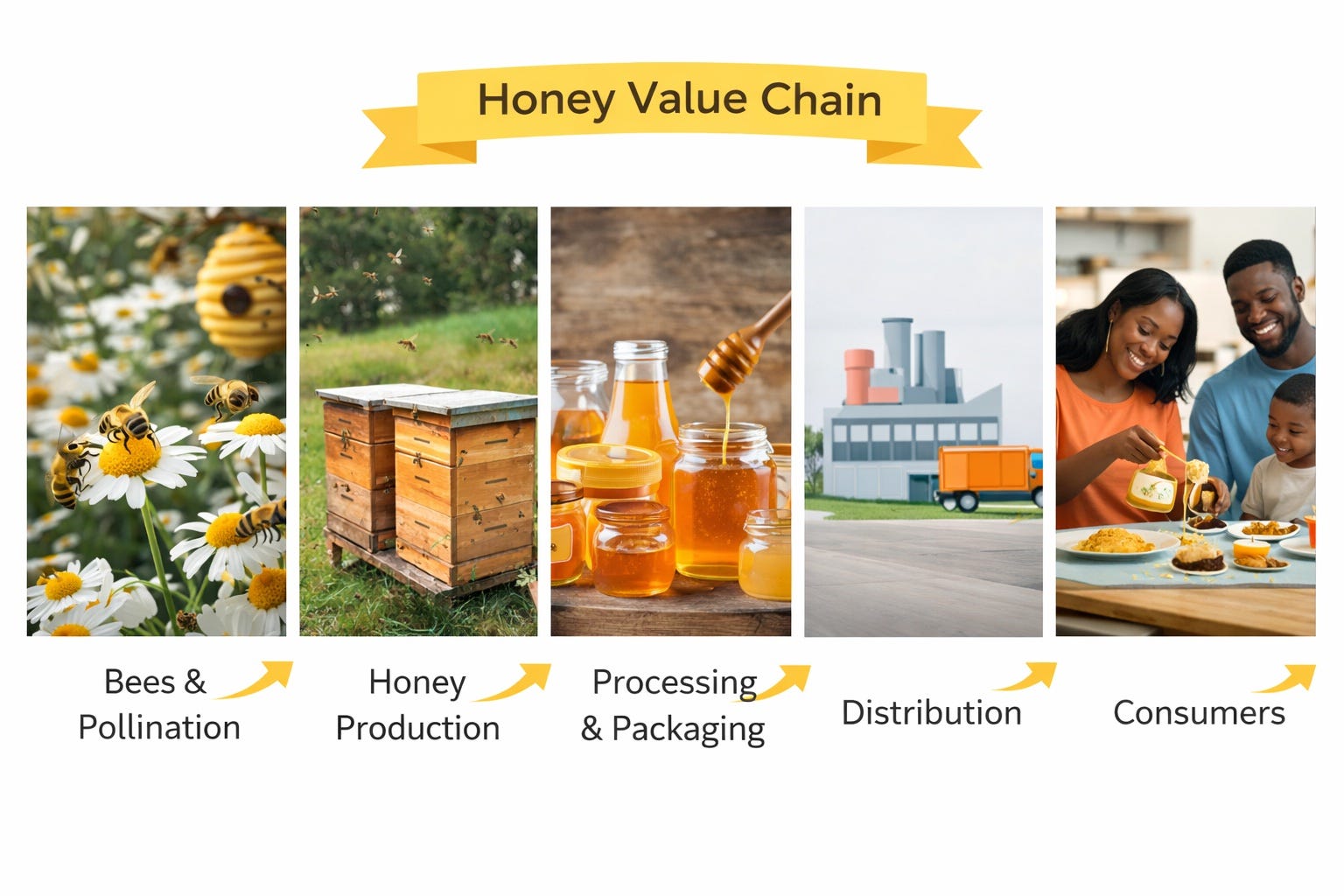
Who pays bees to pollinate and make honey? No one. Yet everyone values the service they provide.
Bees contribute ‘their labor’ and ‘their technology’ to the honey supply chain, yet they receive no monetary payment. If we were to “pay” bees for their work, the appropriate form of compensation would not be wages, but protection of their habitat from pollution. This is especially important when considering that the global honey market is valued at approximately $8 billion, despite one of its most essential inputs—pollination—being provided by nature at no market price.
Environmental economists, like myself, are interested in quantifying the value of goods and services provided by nature, whether or not those goods and services are traded for money. Many of the most valuable environmental services have no market price at all.
For example, consider clean air. The value of clean air is extremely high, even though its effective price is zero, simply because there is no market in which you can purchase it.
Imagine a clean air market.
If you want 90% clean air today, you buy it by the gallon. Buy one day, get the next day free!
There is no such market—yet the value of clean air is immense.
So, if clean air has enormous value but no price, how do we make sure it exists and is maintained? How do we ensure that production activities in the economy do not damage it? What incentive mechanisms are cost-effective for protecting clean air? And how do we make polluters pay when they disrupt this public good?
These are exactly the kinds of questions environmental economists work on.
A question for you:
What other services do you think nature provides that we rely on every day, but never have to pay for, like pollination by bees?
What other environmental services do we depend on that have enormous value but have no market, like clean air?
Thanks for this great post, and I really understand what an environmental economist does. For me, as well as clean air and pollination, one of the most powerful things that nature gives us for free is water. I know that many companies commodify this, but at the end of the day, this is something on which the whole of human life is built, and which, when we go away from the water treatment plants and up into the hills, we can get for free. This is where we really see the many free benefits that nature provides us.
Great 👍
Here are some values for ecological 'accounting' we hope to make visible in decision making:
Biophysical: value of ecosystems/species
Relational: (relationships between people and nature/place) What relationships are being harmed or strengthened - belonging, identity, care, stewardship, reciprocity n ting
Cultural: heritage, identity, continuity, meaning, stewardship practices
Distributional: who bears harm, who gains, who is excluded procedural fairness, historical harms, access to benefits
Governance: who decides, who has voice, consent or recourse
Time: irreversibility, intergenerational effects….