

In this post, I’ll show you exactly how to find out which toxic chemicals are being released into the air in your zip code, who is releasing them, how much, and what it could be doing to your health.
Here’s something most people don’t know—
The federal government tracks toxic chemicals released into the air — by facility, by zip code, by pound. And that data is free, public, and waiting for you right now.
It’s called the EPA’s Toxics Release Inventory (TRI) Program, and it’s one of the most powerful and least talked about tools available to everyday Americans.
Here’s what it tells you:
Which specific chemicals were released into the air in your zip code, if any
Which facility released them — the actual company, by name
How much was released — down to the pound
The health impacts of each chemical
Whether it’s carcinogenic
This isn’t buried government data.
The TRI program exists because Congress decided that communities have the right to be informed when facilities release toxic substances that can harm their health.
Here’s how to look up your zip code right now:
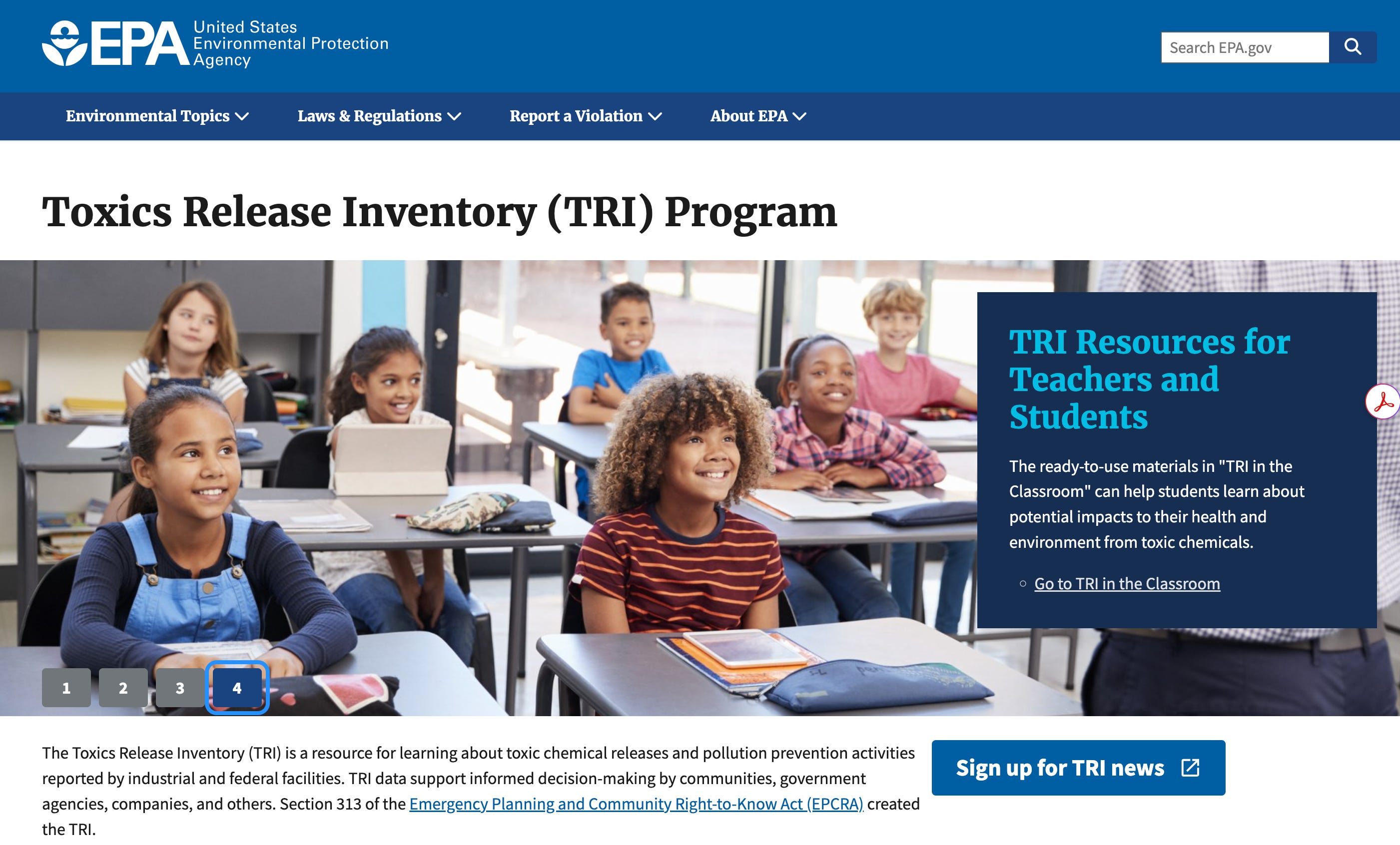
Step 1: Go to EPA’s TRI Program at https://www.epa.gov/toxics-release-inventory-tri-program.
Scroll down until the end of the web page.
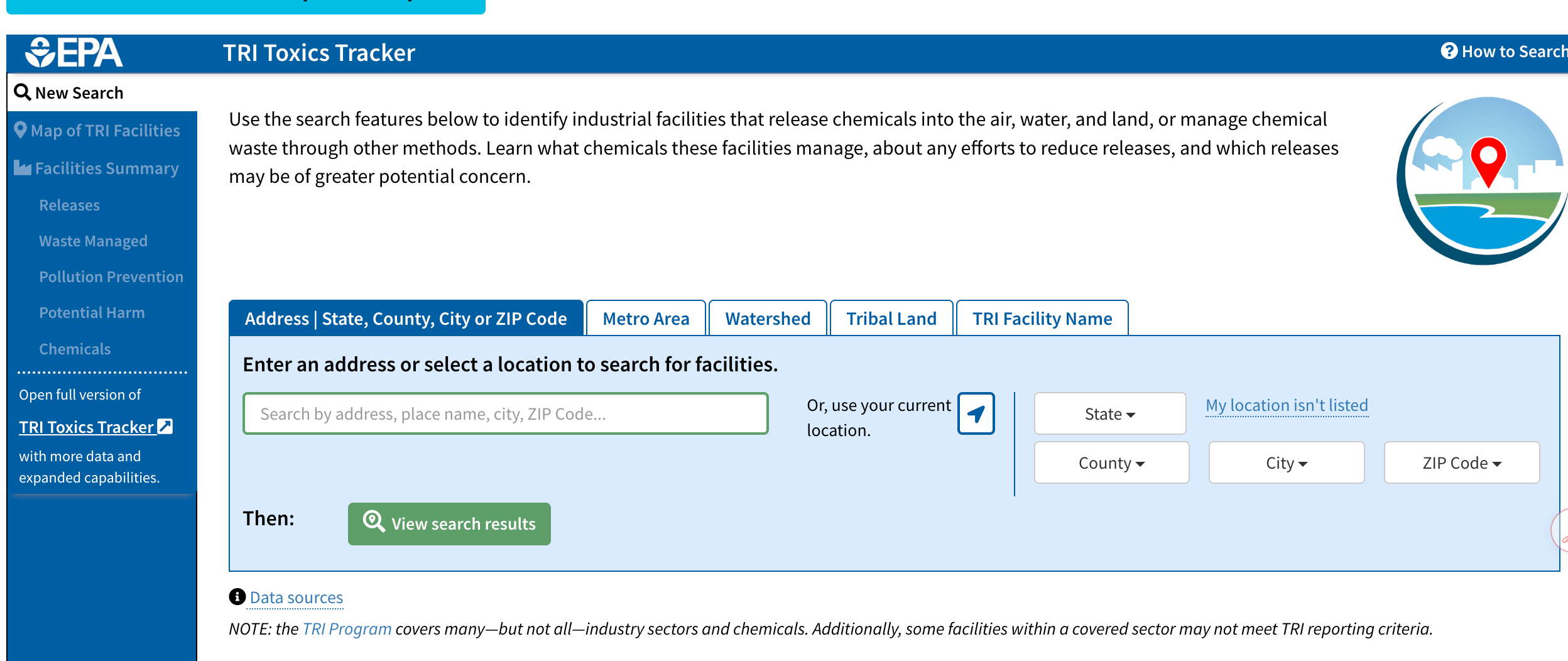
Step 2: Enter your zip code in the TRI Toxic Tracker.
I entered 10475 for Bronx, New York, to illustrate.
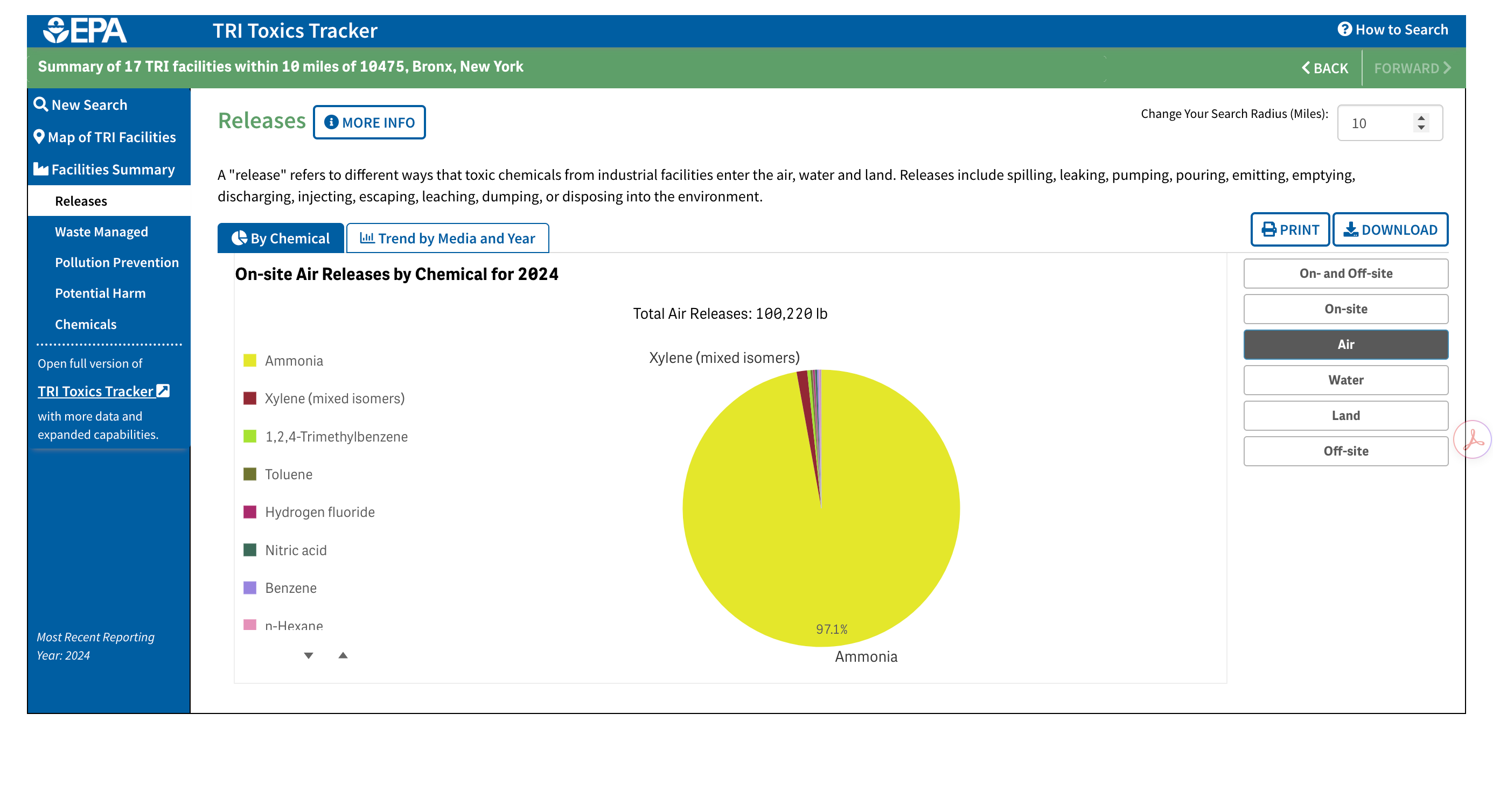
Step 3: Click on “Releases” → then filter to “Air”.
For the zip code I entered, the data shows that 17 facilities within a 10-mile radius released 100,220 pounds of toxic chemicals (mostly ammonia) into the air.
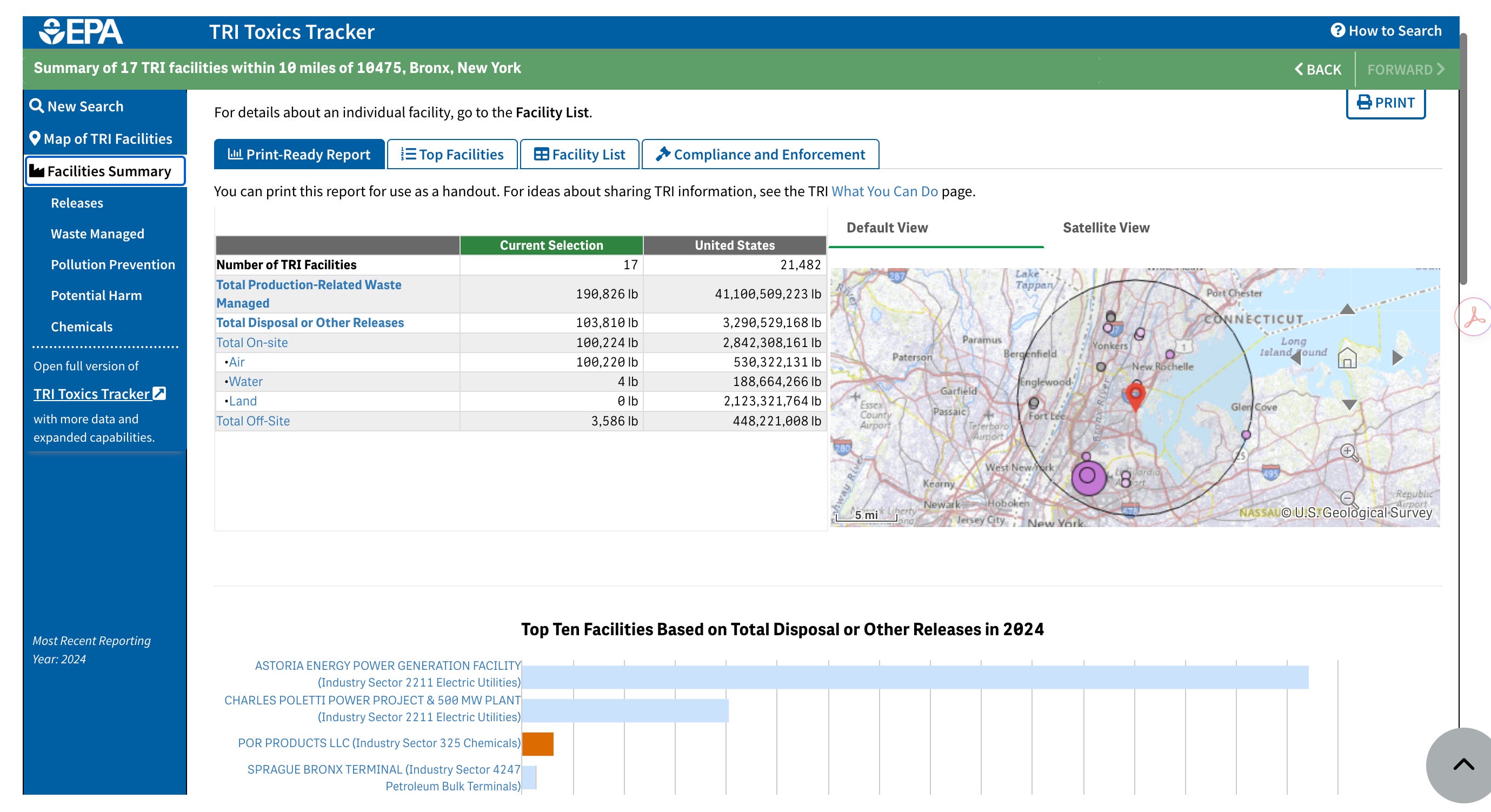
Step 4: Click “Facility Summary”, then scroll down to view the responsible companies.
For the zip code I entered, Astoria Energy Power Generation Facility, an electric utility, is responsible for most of the toxic chemicals released to air (close to 77%).
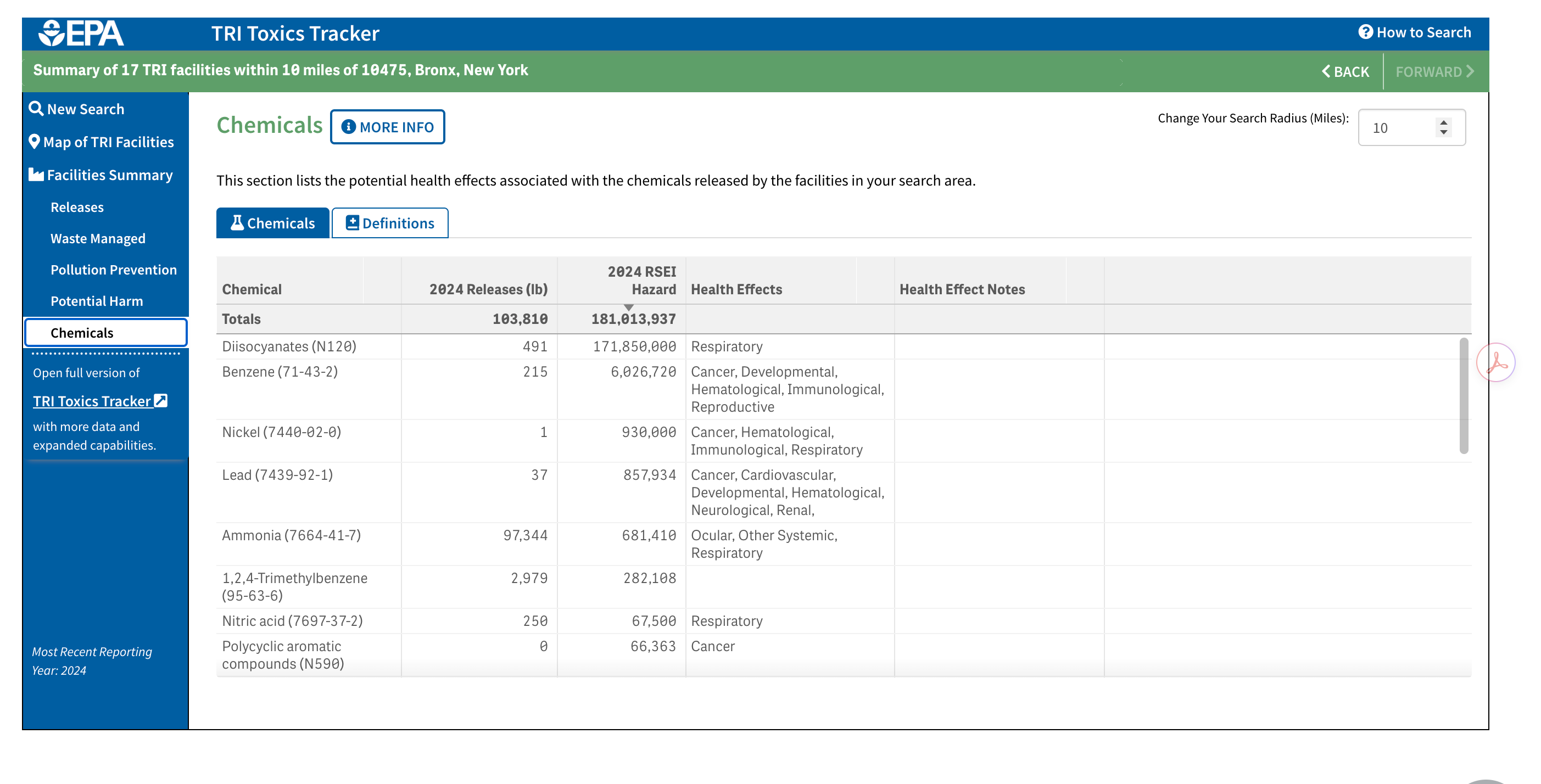
Step 5: Click on “Chemicals” to learn the health effects of the different chemicals released in your zip code.
For the zip code I used, there are certainly some carcinogenic toxic chemicals released to the air, such as benzene, nickel, and lead.
Why this matters
Because knowledge is protection. When you know what’s in your air, you can ask questions, advocate for your family, consult your doctor with real information, and hold polluters accountable.
Share this with someone who lives near a factory or an industrial area. They deserve to know what’s in the air they breathe, and now they can find out in minutes.
Use this step-by-step guide to find out if there are any toxic chemicals being released in your area, and share what you find in the comments.